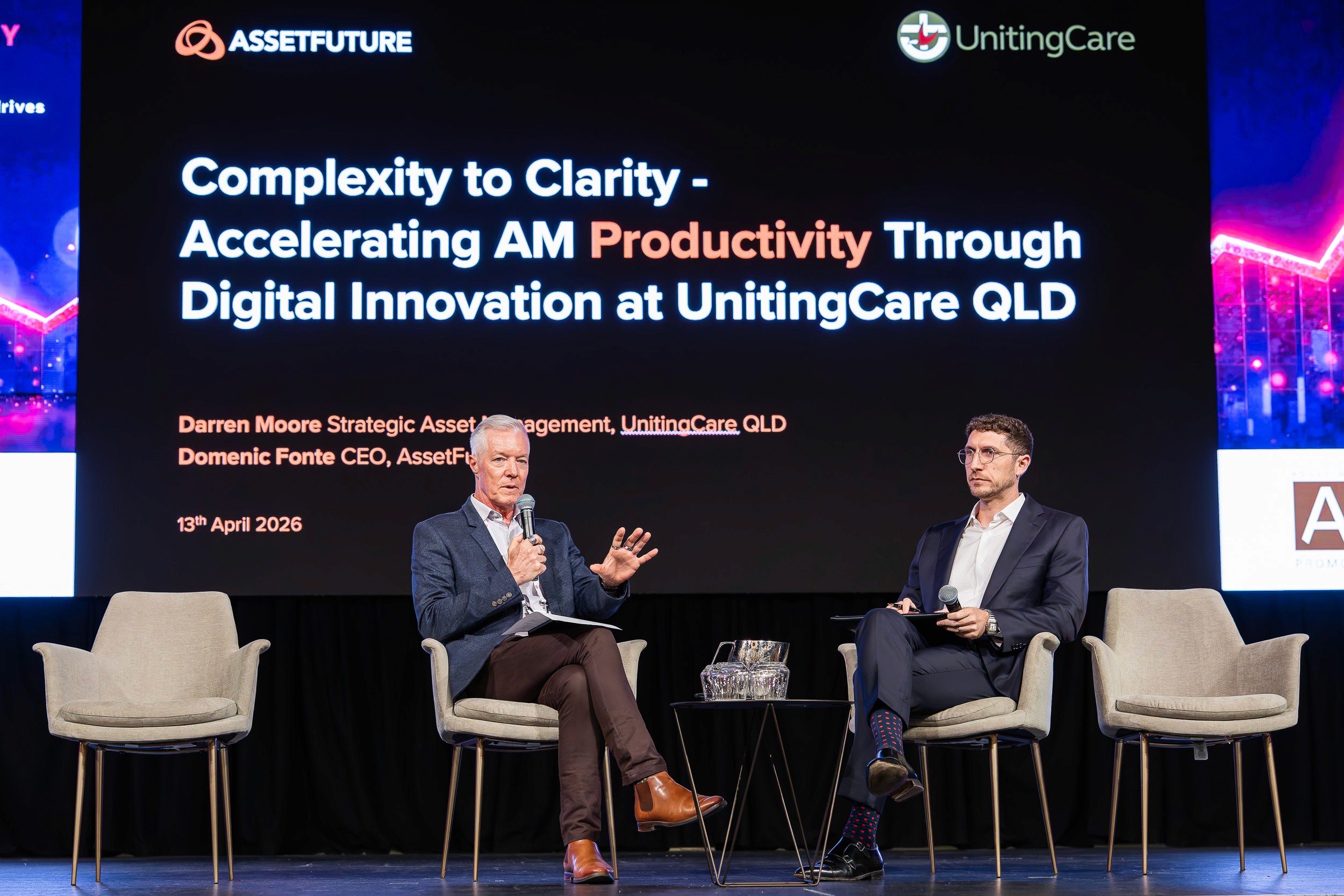
What the data has told us, and what it means for Capital Maintenance Planning (CMP) and asset decisions across retirement living portfolios.
This article summarises the observations Dom Fonte presented to the Retirement Living Council (RLC) board in September 2026, drawn from five years of Asset Management Plans (AMPs) completed with retirement living operators across Australia.
Why this matters: assets are the largest lever in our cost base
~38% of annual costs
Asset-related costs represent the single largest share of village operating expenditure — including R&M and capital renewal. (StewartBrown FY25 national sector benchmarks)
29-year-old villages, on average, across the sector
Many villages are entering higher-maintenance and renewal phases simultaneously.
Operational burden and the cost of inaction
Accelerating backlog and budget volatility create greater management overhead, and carry compliance and reputational consequences.
The resident promise is at stake
Residents' leading request was better and more honest communication about maintenance and future plans — a visible test of operator value. (Ageing Matters 2026)
The question: how much of that 38% is being deployed at the right time, on the right assets, for the right reason?
What five years of AMPs have revealed
Five observations came up consistently across the portfolios we reviewed.
1. Low trust in data
Confidence, not availability, is the barrier. Teams question reliability and minimise how much they use it.
2. Maintenance is under-funded
Budgets follow history. They rarely follow condition or lifecycle demand.
3. Reactive work dominates
Reactive works drive work orders, not planning — distorting the CAPEX/OPEX split.
4. Residents are dissatisfied with maintenance
Slow repairs and recurring defects erode trust. Maintenance was identified as residents' fourth-highest concern (March 2025 RVRA report).
5. Plans are not operationalised
AMPs stay disconnected from budgets and work orders, pointing to compliance over action.
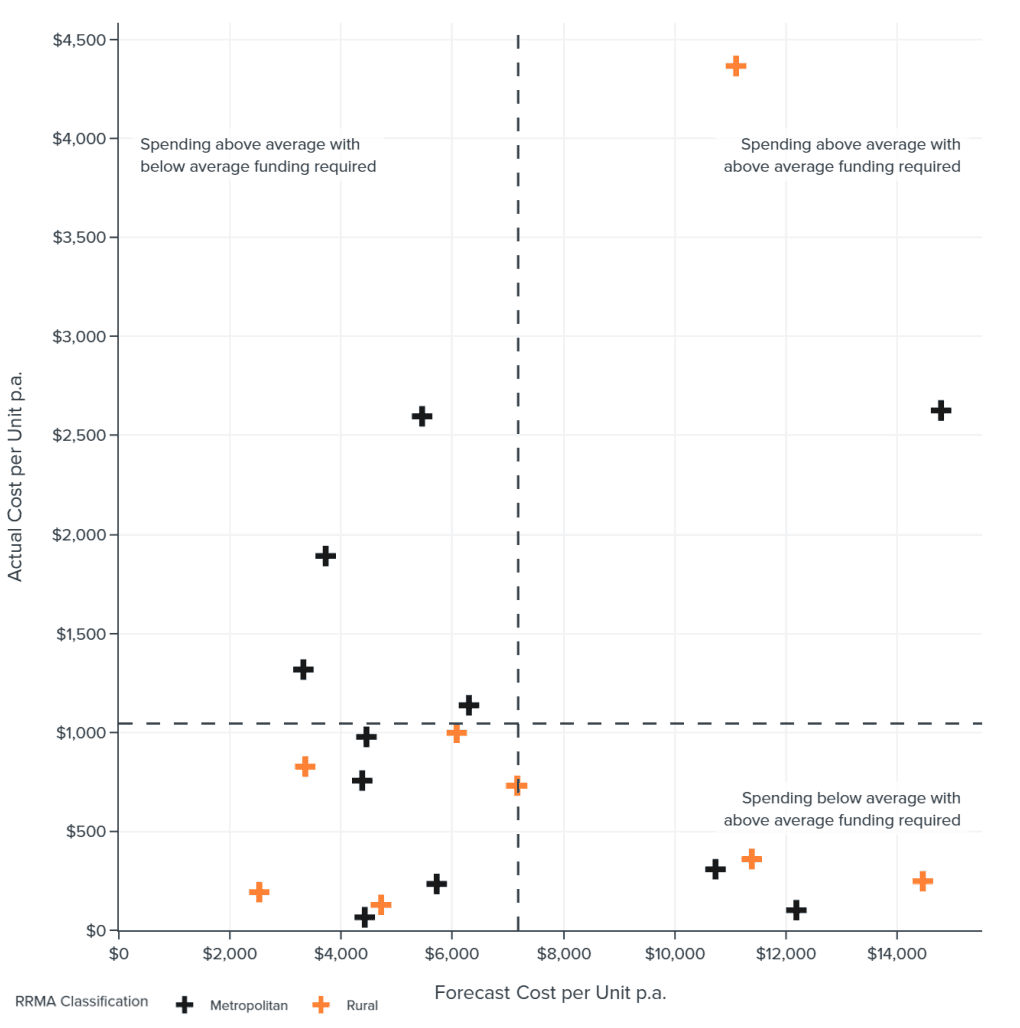
Chart 1 — Insights from the AssetFuture Annual Benchmarking Review (2026). Actual cost per unit p.a. against forecast cost per unit p.a., by RRMA classification (metropolitan and rural).
One cycle, five reinforcing themes
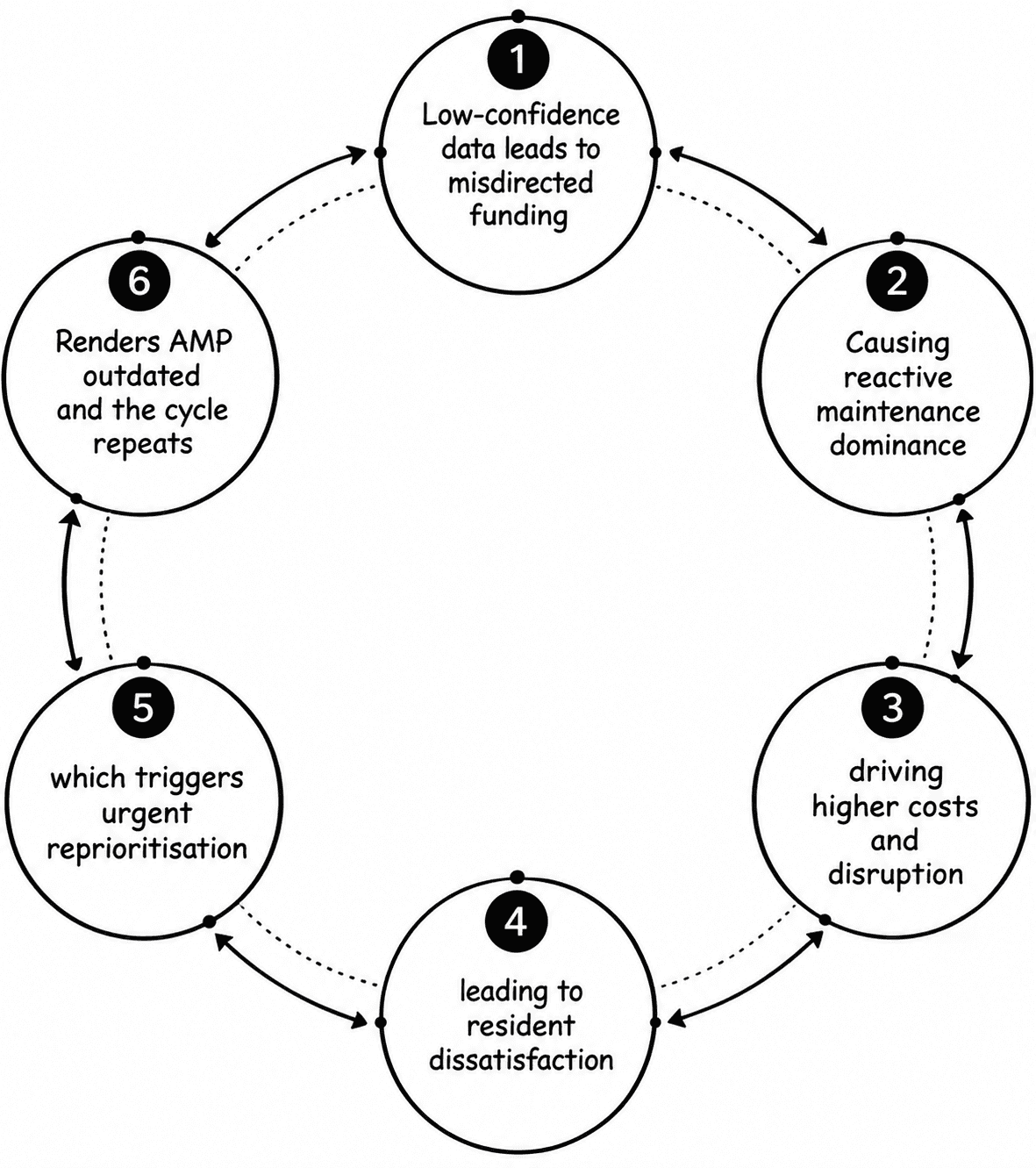
These are not five independent issues. They form a single self-reinforcing loop:
Low-confidence data leads to misdirected funding
Causing reactive maintenance dominance
Driving higher costs and disruption
Leading to resident dissatisfaction
Which triggers urgent reprioritisation
Rendering the AMP outdated — and the cycle repeats
That raises the question for operators: how do we stop a cycle that increases cost and becomes harder to break over time?
Improving the AMP or CMP alone will not interrupt this loop. But it does provide the catalyst to change the model.
When it's done well: asset and capital planning that enables better decisions
Proactive funding — flip the 80:20 reactive imbalance through lifecycle-based planning.
Predictable CAPEX — identify capital cliffs early and smooth expenditure across villages.
Strategic decisions — redevelop, upgrade, maintain or divest, with evidence rather than instinct.
Operational alignment — line of sight from village teams through to property, finance and the board.
Board assurance — evidence-based funding decisions with clearly understood risks.
Compliance by design — the AMP becomes an output of the operating model, not the goal.
The objective: better asset decisions
Better asset decisions. Made earlier, with greater confidence, and translated into action.
We've witnessed operators begin to shift the pendulum from reactive to optimised — harnessing the change as an opportunity rather than a compliance burden.
About AssetFuture
AssetFuture works with retirement living, aged care and infrastructure operators to turn asset data into capital and maintenance decisions that hold up at board level. This presentation was delivered to the Retirement Living Council board in September 2026.